Disclaimer: No supplement replaces a well-balanced diet built on whole foods. Supplements supplement, they fill in the gaps when life, training, or travel makes perfect nutrition impossible. All information here is based on peer-reviewed research. I am not a doctor or dietitian, just an athlete who reads studies for fun. Please talk to your sports RD or physician for personalized guidance.
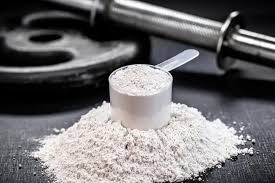
Anyways… Here's a breakdown of my favorite white powder.
The Science is There
It is hard to argue with science. If you are an athlete, you should probably be taking creatine unless you have been told not to for medical reasons (valid).
Creatine has one of the strongest and safest evidence bases for improving high-intensity exercise performance, strength, power, and work capacity in athletes. It’s a naturally occurring compound made from amino acids, and about 95% of it is stored in your skeletal muscle as phosphocreatine (PCr).
When you perform a high intensity movement such as sprinting or lifting, your muscles rely on ATP (adenosine triphosphate) for energy (you know the middle school saying“mitochondria is the power house of the cell”? Well, ATP is the power). ATP is the body’s “currency of energy,” released when a phosphate bond is broken , turning ATP → ADP(adenosine diphosphate)
Unfortunately, ATP stores are limited, and your muscles only hold enough for 1-2 seconds of max effort. After that, ATP drops, fatigue hits, and power output falls. Catalyzed by the enzyme creatine kinase, phosphocreatine is able to step in and recycle ADP back into ATP, which will instantly resupply energy for another few extra seconds.
By boosting PCr stores, creatine supplementation will increase ATP re-synthesis rate which allows for more power output in short bursts, delays fatigue, improves training quality, enhances recovery, promote muscle growth, and benefits even go further as emerging research supports roles in neural ATP support (brain uses ATP too!), cell hydration, and reducing oxidative stress and inflammation (did you read my last blog on inflammation?).
The biochemical mechanism is simple and direct, and it targets a system every athlete relies on. Since most athletes are not saturated, the response is predictable and measurable.
Creatine Will Make You Bulky and Look Like a Man and Gain Crazy Weight, and Make You Hold Onto Water Weight, so You Will Look Bloated. Just kidding. A puppy actually dies every time someone says this. These are common misconceptions, though, that are very, very false.
Creatine does not make you bloated, but it does increase water content inside your muscles. That is not the same thing as bloating or puffiness; it's actually the main reason why you drink water. When you take creatine, your muscles will store more phosphocreatine, and it will have a small increase in intracellular water, which means water inside the muscle cells, not under the skin. This is actually a good thing because it hydrates the muscle cells and creates an environment that supports protein synthesis and recovery.
Creatine does not make you bulky, training and eating des. Creatine will not magically pack on muscle unless you are intentionally training for hypertrophy and eating in a calorie surplus. It does improve your training quality, so you can lift heavier, sprint faster, or go longer, which helps you build muscle over time, but that is not a bad thing; that is quite literally the goal when you are training. Why would you lift if you don't want to build muscle??
GIRLS!!!! If I had a dime for every time a female athlete said this, I could stop writing these dumb blogs (jk I love doing this). But the myth is way overblown for us. In fact, multiple studies show that creatine improves performance without causing “bulkiness” or noticeable physique change in women. We even experience less total water retention than men because we have a lower baseline muscle creatine store.
How to Take it
I’m actually not going to give you dosing or timing recommendations here; that’s not my lane, and research is still mixed on whether timing (pre vs. post-workout) even matters much. But, research does back that creatine monohydrate is the best form- it’s the most researched, most effective, and affordable form. You don’t need the highly marketed “micronized”, “buffered”, or “HCL ultra-absorb” versions.
Bottom Line
Creatine isn’t an over hyped supplement; it is one of the most researched, effective, and safest performance enhancers out there. It is not magic, so you still have to show up to“optional” lifts and conditioning, but it still supports every rep, sprint, and recovery along the way.